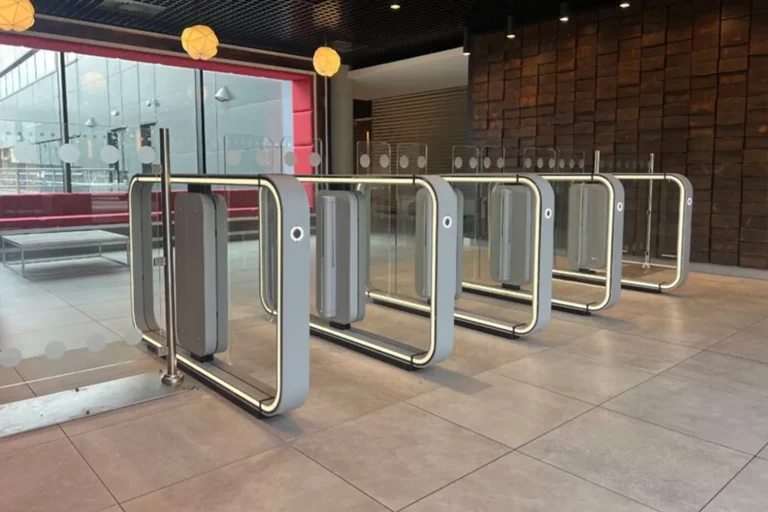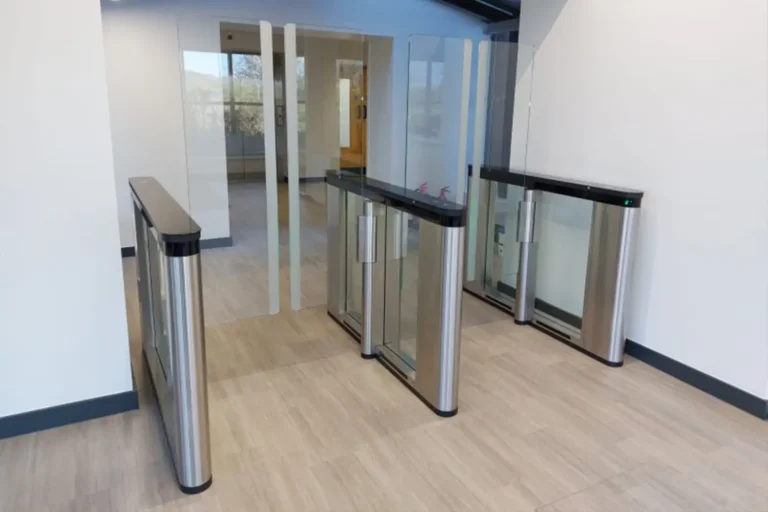
What Is an Optical Turnstile? Understanding Modern Sensor-Based Entrance Control
Learn what an optical turnstile is, how it works, and why speed…
Phone: +86 19540588776
WhatsApp / Wechat: +86 19540588776
Email: info@yunshao.com
Address: Building 6, Guanlan High-tech Industrial Park, Longgang District, Shenzhen City, Guangdong Province, China
Page Catalog
As buildings place greater emphasis on security, efficiency, and entrance design, traditional pedestrian barriers are increasingly being replaced by smarter and more refined access control systems. One of the most widely used terms in this area is optical turnstile.
In modern entrance control projects, the term optical turnstile is often used as a broad category for sensor-based turnstile lanes that monitor pedestrian movement through infrared or optical detection technology. Depending on the barrier design and product positioning, these systems may also be described as speed gates, swing turnstile gates, flap barrier gates, or sliding turnstiles. That is why the terminology can sometimes overlap in the market.
For buyers, contractors, distributors, and system integrators, understanding this category is important. An optical turnstile is not simply a gate that opens and closes. It is a modern entrance control solution that combines credential verification, sensor-based passage detection, and controlled pedestrian flow in a way that is more suitable for today’s office buildings, commercial properties, schools, and premium facilities.
In this article, we explain what an optical turnstile is, how it works, why the term is used in different ways, what types of products are commonly included in this category, and how to choose the right solution for your project.
An optical turnstile is a modern pedestrian entrance control system that uses optical or infrared sensors to monitor movement through a lane while working together with an access control system. Instead of relying only on a purely mechanical barrier, it uses sensor logic to detect authorized passage, tailgating, wrong-way entry, and other abnormal movement behaviors.
In many real-world projects, optical turnstiles are designed with slim cabinets and elegant barrier structures to create a cleaner and more modern entrance appearance. Once a valid credential is presented, the system grants authorization and the barrier allows passage. During this process, the sensors monitor lane activity to confirm that passage is correct and that unauthorized following or irregular entry attempts are detected.
In simple terms, an optical turnstile is a sensor-based entrance control gate that manages pedestrian flow more intelligently than traditional mechanical turnstiles.
The word optical comes from the detection technology used inside the lane. These systems usually rely on infrared or photoelectric sensors to monitor how people move through the passage area. This is what allows the turnstile to detect whether one person is passing normally, whether a second person is following too closely, or whether someone is attempting to enter without valid authorization.
This is also the reason why the term optical turnstile is often broader than a single physical gate type. A speed gate, flap barrier, swing turnstile gate, or sliding turnstile may all be called an optical turnstile if the product relies on sensor-based lane monitoring as a key part of its operation.
So while the barrier form may vary, the common feature is the same: modern access control combined with optical detection technology.
The working process of an optical turnstile is usually fast and straightforward. A user first presents an approved credential, such as an RFID card, QR code, mobile credential, fingerprint, or facial recognition identity. The access control system checks whether the user has valid permission to enter. If authorization is approved, the lane opens or unlocks for passage.
At the same time, infrared sensors inside the lane monitor how the person moves through the entrance. These sensors help determine whether the passage is normal, whether more than one person is entering on a single authorization, whether someone is moving in the wrong direction, or whether there is another irregular movement pattern that should trigger a response.
If the system detects abnormal activity, it may keep the barrier closed, sound an alarm, or send a signal to the control platform. This combination of access verification and passage monitoring is what makes optical turnstiles especially effective in modern building entrances.
A typical optical turnstile system may include:
Because the term is used broadly, optical turnstiles can include several different product styles. The main difference is usually not whether they are optical, but rather how the barrier moves, what kind of passage experience they provide, and which project environments they are designed for.
Although these products may be described differently, they often share the same core principle: credential verification + optical sensor monitoring + controlled pedestrian passage.
Because modern entrance control products can include different barrier styles such as swing gates, flap barriers, sliding turnstiles, and speed gates, product terminology can sometimes overlap. For a more detailed comparison of different turnstile gate types, security levels, traffic efficiency, and ideal applications, you can also read our Turnstile Gate Types Comparison guide.
Many customers compare optical turnstiles with more traditional turnstile types such as tripod turnstiles or full height turnstiles. The biggest difference is that optical turnstiles focus more on sensor-based monitoring, smoother user passage, and modern entrance appearance, while traditional turnstiles rely more heavily on physical barrier restriction and mechanical control.
| Feature | Optical Turnstile | Traditional Turnstile |
|---|---|---|
| Main Control Logic | Optical sensor monitoring + access verification | Mechanical barrier restriction + access control |
| Appearance | Modern and premium | More industrial or utilitarian |
| User Experience | Smoother and more welcoming | More physical and mechanical |
| Typical Environments | Office lobbies, commercial entrances, premium indoor sites | Gyms, factories, construction sites, outdoor security areas |
| Common Barrier Styles | Swing, flap, sliding, speed gate | Tripod arms, full height rotor, basic mechanical barriers |
This does not mean one category is always better than the other. The best choice depends on the security level, project budget, traffic volume, architectural style, and expected user experience.
This is one of the most common questions in the entrance control industry. In many situations, optical turnstile and speed gate are used in very similar ways, and sometimes they refer to essentially the same product family.
Generally speaking, the term optical turnstile emphasizes the sensor-based passage detection and lane control logic of the system, while speed gate often emphasizes fast barrier response, premium appearance, and smooth user flow. In practical projects, many speed gates are optical turnstiles because they rely on infrared sensors to detect movement and manage lane behavior.
For this reason, buyers should not focus only on the product name. It is more important to review the actual barrier structure, sensor layout, lane width, credential compatibility, and project requirements before choosing a model.
1. Modern Entrance Appearance
One of the biggest advantages of optical turnstiles is their architectural look. Compared with more traditional turnstile types, they usually offer a cleaner, more premium entrance image that better matches modern office buildings, headquarters, banks, and commercial properties.
2. Smoother Pedestrian Flow
Optical turnstiles are designed to support quick authorization and efficient passage. This helps reduce queuing at busy entrances while maintaining better access discipline than an open door or uncontrolled lobby entrance.
3. Better User Experience
Because these systems are less mechanical in appearance and movement, they often feel more welcoming to authorized users. This matters in buildings where visitor impression and everyday comfort are part of the project goal.
4. Improved Tailgating Detection
Sensor-based monitoring is one of the major strengths of optical turnstiles. It helps the system detect unauthorized following, irregular entry, and wrong-way movement more effectively than a basic barrier alone.
5. Flexible Integration With Modern Credentials
Optical turnstiles can typically work with RFID readers, QR code systems, facial recognition terminals, fingerprint devices, and mobile credentials. This makes them suitable for a wide range of modern access control environments.
6. Suitable for Premium Indoor Applications
Because they balance controlled access, design quality, and efficient throughput, optical turnstiles are often the preferred choice for premium indoor entrances where both security and appearance matter.
Optical turnstiles are most commonly used in indoor or semi-indoor environments where entrance design, traffic efficiency, and access control all matter at the same time.
In these applications, the goal is usually not only to block passage, but to create a controlled, efficient, and visually professional entrance experience.
Optical turnstiles can help detect and reduce tailgating, but their performance depends on the sensor arrangement, barrier type, lane width, software logic, and the overall entrance design. In many office and commercial projects, they provide a very effective balance between comfortable authorized passage and improved monitoring of unauthorized following behavior.
However, if a project requires a very high level of physical restriction, a stronger barrier solution such as a full height turnstile may be more appropriate. Optical turnstiles should be understood as a modern controlled access solution with enhanced detection, rather than a fully enclosed maximum-security barrier.
Choosing the right optical turnstile depends on the actual needs of the entrance, not just the product name. Important decision factors usually include:
For example, a premium office building may prefer speed gates or sliding turnstiles with facial recognition or RFID integration, while a commercial or educational site may choose swing or flap barrier designs for efficient daily access management. The right choice depends on the balance you need between appearance, throughput, accessibility, and control.
YUNSHAO provides complete pedestrian entrance control solutions for offices, commercial buildings, schools, industrial projects, and other managed access environments. Our modern entrance control range includes speed gates, swing turnstile gates, flap barrier gates, and sliding turnstiles, which are commonly grouped under the broader category of optical turnstiles.
For optical turnstile applications, YUNSHAO supports integration with RFID readers, QR code systems, facial recognition devices, fingerprint terminals, and access control software. We also provide free access control management software to help customers manage users, permissions, and entry records more efficiently.
As a factory-direct manufacturer, YUNSHAO supports OEM/ODM customization for project-based requirements. With practical integration support, strict quality control, and a 3-year warranty with lifetime technical support, we help customers build reliable entrance control systems for long-term use. We support the needs of buyers, contractors, distributors, and system integrators with project-based solutions that improve compatibility, simplify coordination, and provide more dependable after-sales support.
If you are looking for the right optical turnstile for your building, contact YUNSHAO to get recommended models, matching credential solutions, and a customized entrance control system tailored to your project requirements.
An optical turnstile is a modern sensor-based entrance control solution that combines credential verification with intelligent passage monitoring. In the market, the term often acts as a broader category that can include speed gates, swing turnstile gates, flap barriers, and sliding turnstiles, depending on the barrier style and product design.
For many office buildings, commercial entrances, schools, and premium facilities, optical turnstiles offer an effective balance of controlled access, modern appearance, and smooth pedestrian flow. Instead of thinking of the term as one single product, it is more useful to understand it as a family of modern entrance systems built around optical detection and lane management.
If you are planning an entrance control project and want to choose the right optical turnstile solution, contact YUNSHAO to get model recommendations, integration advice, and a customized solution for your building.
In many cases, yes. A speed gate is often part of the broader optical turnstile category because it uses sensors to monitor lane passage. The difference is usually more about naming and product positioning than a completely separate technology.
They often are. If these products use infrared or optical sensors for lane monitoring and access control logic, they are usually considered part of the modern optical turnstile family.
Most optical turnstiles are better suited for indoor or semi-indoor installations. Outdoor use depends on cabinet design, protection level, and the environmental conditions of the site.
Yes. Optical turnstiles can usually integrate with RFID, QR code, fingerprint, facial recognition, and other credential technologies depending on the project requirements.
Not in every situation. Optical turnstiles are often better for controlled indoor environments, premium appearance, and smoother user passage, while tripod turnstiles may still be more suitable for some basic, rugged, or cost-sensitive access points.
Yes. One of the key advantages of optical turnstiles is sensor-based lane monitoring, which helps detect tailgating and other unauthorized passage behavior.
Learn what an optical turnstile is, how it works, and why speed…
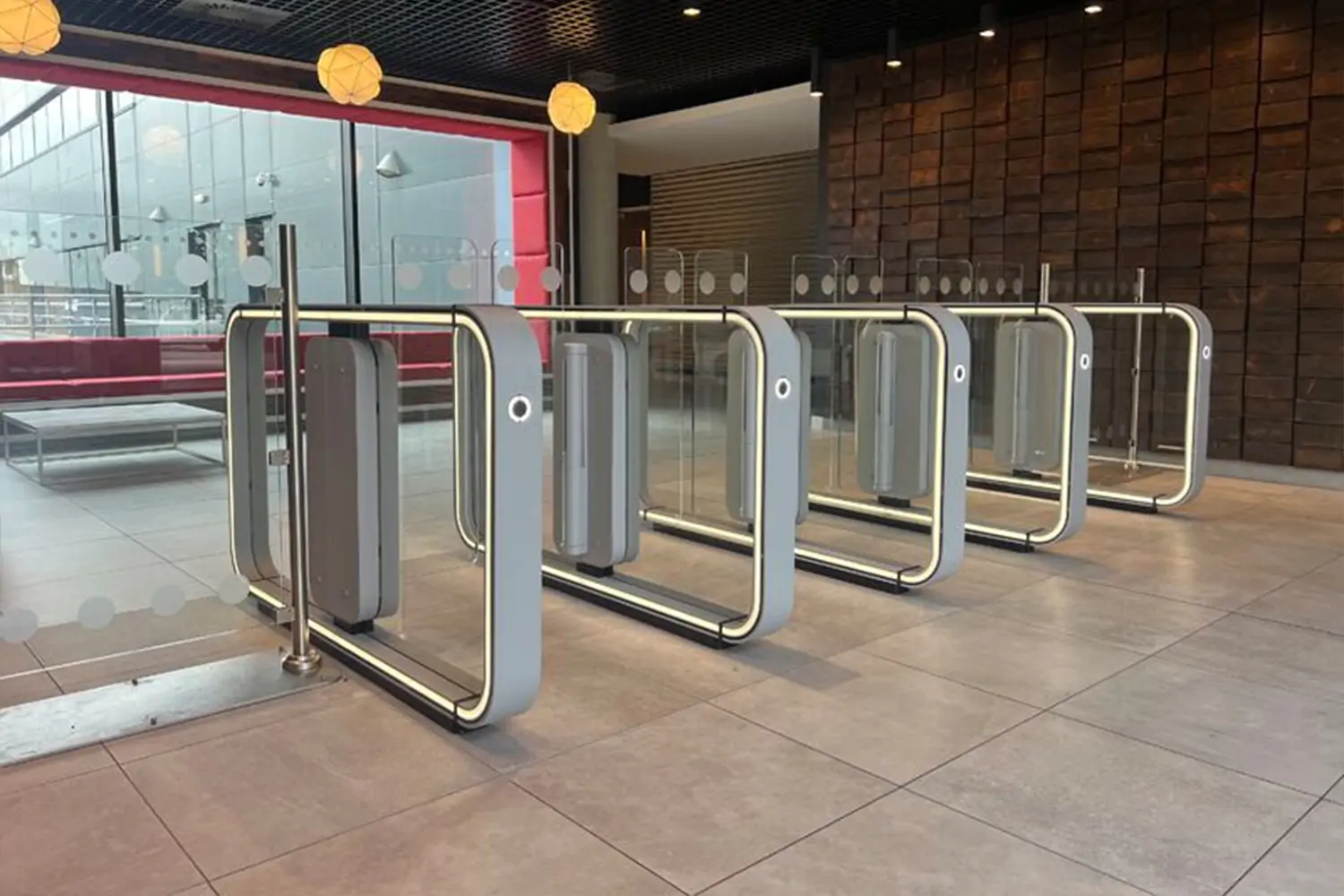
Discover how a turnstile with RFID reader works, its key benefits, common…