1. Home
  2. »
  3. Blog
  4. »
  5. What Is a Speed Gate?

Kontakt

Phone: +86 19540588776
WhatsApp / Wechat: +86 19540588776
Email: info@yunshao.com
Address: Building 6, Guanlan High-tech Industrial Park, Longgang District, Shenzhen City, Guangdong Province, China

Page Catalog

  • What Is a Speed Gate?
  • How Does a Speed Gate Work?
  • Why Is It Called a Speed Gate?
  • Main Features of a Speed Gate
  • Where Are Speed Gates Used?
  • Why Are Speed Gates Popular in Modern Buildings?
  • Advantages of Speed Gates
  • Are Speed Gates Secure?
  • What Access Control Systems Can Work with Speed Gates?
  • How to Choose the Right Speed Gate
  • Recommended Products
  • Conclusion
  • FAQ
  • Related Articles

What Is a Speed Gate?

If you have ever walked into a modern office building, premium residential tower, airport, or metro station, there is a good chance you have passed through a speed gate. These sleek pedestrian entrance systems are now widely used in access control projects because they combine security, fast passage, and a modern architectural appearance.

So, what is a speed gate exactly?

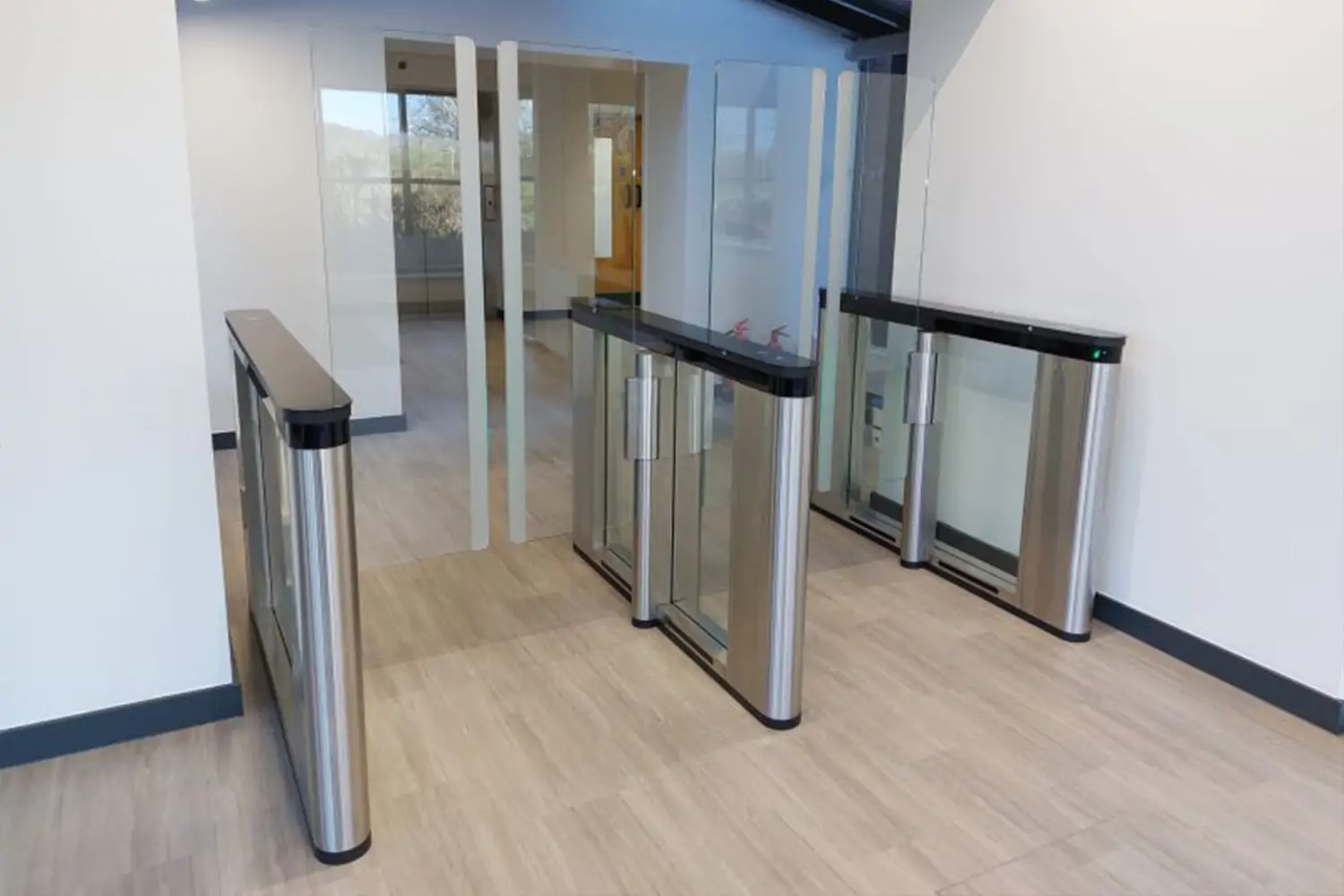
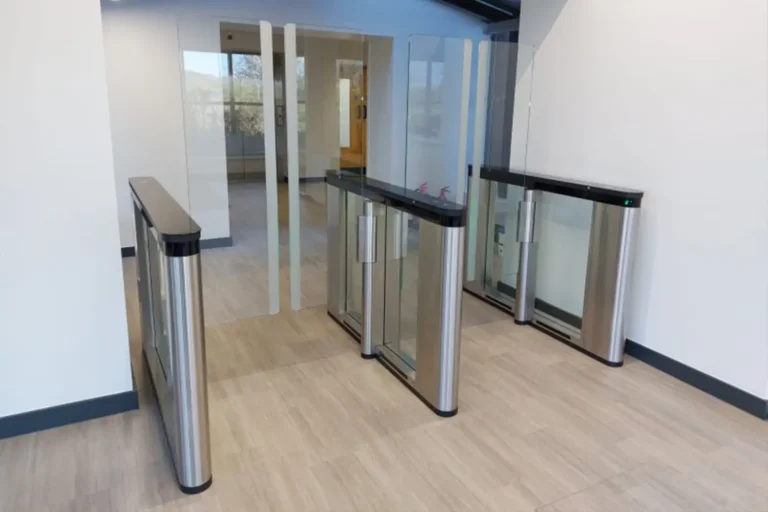
speed gate is an automated pedestrian access control gate designed to allow authorized people to pass through quickly while helping prevent unauthorized entry. Unlike traditional mechanical turnstiles, speed gates usually use retractable glass or acrylic barriers, electronic sensors, and intelligent control systems to create a smoother and more professional entrance experience.

In simple terms, a speed gate is a modern upgrade for buildings that need better entrance control without making the lobby or reception area look too industrial.

How Does a Speed Gate Work?

A speed gate works together with an access control system. When a person presents a valid credential, such as an RFID card, QR code, barcode, fingerprint, facial recognition identity, or mobile credential, the system verifies permission and opens the gate automatically.

Once access is granted, the barrier panels open quickly, allowing the person to pass through. After passage, the panels close again to help maintain controlled entry. Infrared sensors inside the lane monitor user movement and can detect issues such as tailgating, unauthorized entry, reverse passage, or abnormal movement.

This combination of automation, sensors, and access control integration is what makes speed gates a popular choice for modern pedestrian management.

Why Is It Called a Speed Gate?

The name “speed gate” comes from the fact that it is designed for fast and smooth pedestrian passage. Compared with many traditional turnstiles, speed gates open and close more quickly, making them ideal for high-traffic entrances where efficiency matters.

But speed is not the only reason they are popular. In many projects, building owners and system integrators also choose speed gates because they look cleaner, more modern, and more suitable for premium environments.

Main Features of a Speed Gate

Although different models have different specifications, most speed gate systems include the following core features:

  • Fast opening and closing for efficient pedestrian flow
  • Retractable glass or acrylic barriers for a modern appearance
  • Infrared detection sensors for passage monitoring
  • Anti-tailgating functions to improve access control security
  • Bidirectional lane control for entry and exit management
  • Integration with third-party access systems
  • Anti-pinch and safety protection
  • Emergency opening function for evacuation or fire alarm response

Because of these features, speed gates are often seen as one of the most advanced pedestrian gate solutions for modern buildings.

Where Are Speed Gates Used?

Speed gates are widely used in places where security, efficiency, and appearance are all important. They are especially common in projects where the entrance itself is part of the building’s image.

Typical applications include:

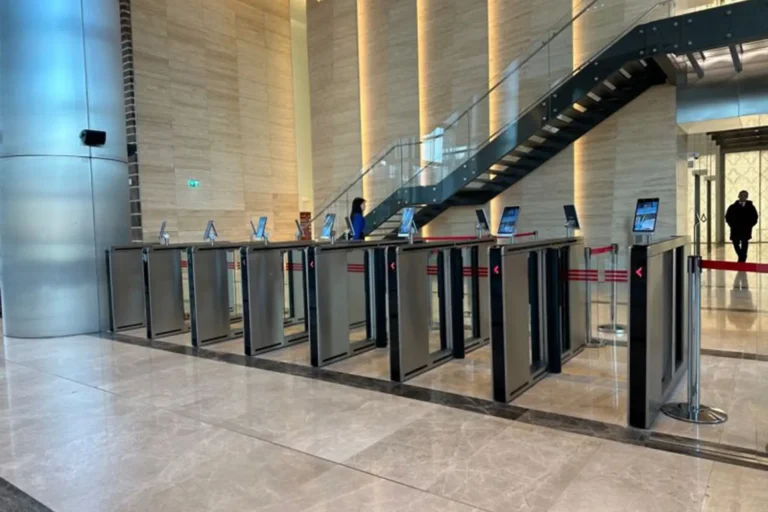
  • Office buildings and corporate headquarters
  • Commercial office lobbies
  • Business parks and technology campuses
  • Airports and transportation terminals
  • Metro and public transit stations
  • Banks and financial institutions
  • Government buildings
  • Hotels and serviced apartments
  • Premium residential communities
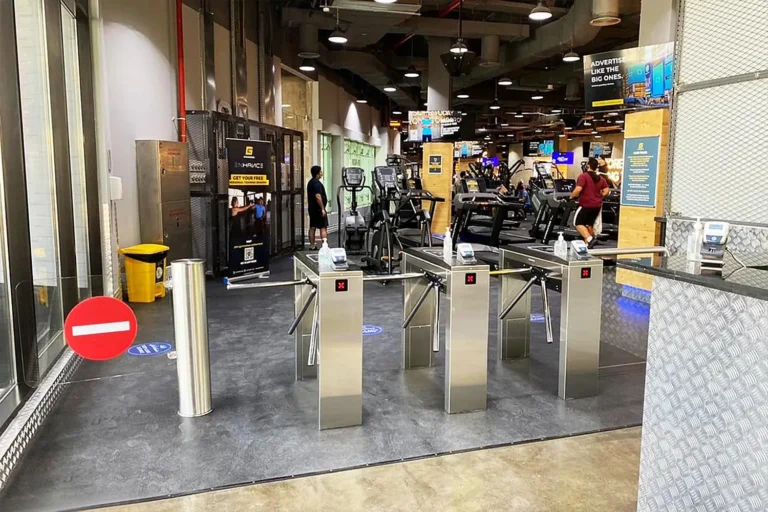
  • Gyms and fitness clubs
  • Schools and universities

In these environments, speed gates help create a more controlled, efficient, and professional entrance experience for staff, visitors, residents, or members.

Modern buildings need more than just a physical barrier. Today, developers, architects, security integrators, and property managers want entrance control systems that support both building security and the overall visual impression of the project.

This is where speed gates stand out.

Compared with traditional turnstiles, speed gates usually offer a cleaner design, faster throughput, and better compatibility with smart access control technologies. They can make a reception area feel more organized and premium, while still helping control who enters and exits the building.

That is why speed gates are now widely considered a standard entrance solution in modern office towers, smart buildings, commercial complexes, and other high-end projects.

Advantages of Speed Gates

1. Modern and Elegant Design

One of the biggest advantages of a speed gate is its appearance. Many buildings do not want a harsh or industrial-looking entrance system in the lobby. Speed gates solve this problem by offering a sleek and professional design that fits modern architecture much better.

2. Faster Pedestrian Flow

In busy entrances, long queues can create a poor user experience. Speed gates are built for smooth, rapid passage, which helps improve traffic flow during peak entry and exit times.

3. Better User Experience

Because speed gates open smoothly and feel less restrictive than some traditional barriers, they provide a more comfortable experience for employees, residents, visitors, and guests.

4. Flexible Access Control Integration

Modern speed gates can work with many different credential methods, including RFID cards, QR codes, barcodes, facial recognition terminals, fingerprint readers, mobile apps, and visitor management systems.

5. Improved Security Management

While speed gates are not always the strongest physical barrier compared with full height turnstiles, they still provide effective access control in many indoor or supervised environments. Sensor logic and intelligent lane control help reduce unauthorized passage attempts.

Speed Gate vs Traditional Turnstile

Many people ask whether a speed gate is the same as a turnstile. The short answer is that a speed gate is a type of pedestrian entrance control gate, but it differs significantly from traditional turnstiles such as tripod turnstiles or full height turnstiles.

Traditional turnstiles usually focus more on physical restriction and basic access control. Speed gates, on the other hand, are designed to provide a more premium balance of security, speed, comfort, and architectural appearance.

Feature Speed Gate Traditional Turnstile
Appearance Modern and elegant More functional and industrial
Passage Speed Fast and smooth Usually slower
User Experience More comfortable and premium More basic
Security Method Sensors + controlled barriers Mechanical or semi-automatic barrier control
Typical Applications Offices, lobbies, premium buildings Gyms, factories, stadiums, industrial sites

Are Speed Gates Secure?

Yes, speed gates can provide a high level of security when properly configured and integrated with a suitable access control system.

However, it is important to understand that speed gates are usually designed for controlled indoor entrances rather than extreme high-security perimeter protection. For example, a full height turnstile is generally more suitable for unmanned outdoor sites that require stronger physical deterrence.

Speed gates are best suited for environments where the goal is to combine security with efficient and professional visitor flow.

What Access Control Systems Can Work with Speed Gates?

Modern speed gates are highly flexible and can work with many authentication methods, including:

This flexibility makes speed gates a preferred option for smart buildings and integrated security projects.

How to Choose the Right Speed Gate

Choosing the right speed gate depends on several factors, including installation location, daily traffic volume, available lane width, desired appearance, and the access control method to be used.

Before selecting a model, project planners usually consider:

  • Indoor or semi-outdoor installation environment
  • Number of users per day
  • Required lane width
  • Accessibility needs
  • Integration with existing access control systems
  • Security level and anti-tailgating requirements
  • Architectural style of the entrance

For wider passages, projects may use a standard lane together with an accessible lane for wheelchair or visitor access.

Conclusion

A speed gate is a modern entrance control solution that combines fast pedestrian passage, smart access control integration, and an elegant architectural appearance. It is widely used in office buildings, commercial spaces, transport hubs, and other sites where both efficiency and image are important.

Compared with traditional turnstiles, speed gates provide a more premium look and a smoother user experience, while still supporting reliable security management. For modern projects that require professional access control without sacrificing aesthetics, speed gates are often one of the best choices available.

FAQ

A speed gate is a type of pedestrian access control gate that usually uses fast-moving glass barriers and a more modern design. Traditional turnstiles are often more mechanical and focused on basic physical access control.

Speed gates are commonly used in office buildings, commercial lobbies, airports, metro stations, banks, government facilities, hotels, and premium residential projects.

Yes. Many speed gates can integrate with facial recognition devices, RFID readers, QR code scanners, and other access control technologies.

Some models can be adapted for semi-outdoor environments, but most speed gates are primarily designed for indoor or covered entrances. Outdoor projects may require more robust protective designs.

What Is a Speed Gate?

What Is a Speed Gate?

What is a speed gate? Learn how speed gates work, their key…

Is It Turnstyles or Turnstiles?

Is It Turnstyles or Turnstiles?

Is it turnstyles or turnstiles? Learn the correct spelling of turnstile, what…
Why Do Gyms Use Turnstile Gates for Access Control?

Why Do Gyms Use Turnstile Gates for Access Control?

Learn why gyms use turnstile gates for access control. Discover how gym…